About Me
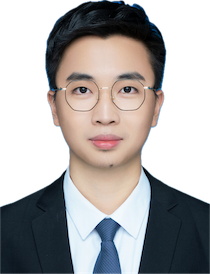
I am a Ph.D. candidate in the Database Group at The Chinese University of Hong Kong (CUHK), advised by Prof. Sibo Wang. I received my B.Eng. from the University of Science and Technology of China (USTC) in 2023. I was a visiting student in the Data Systems Group at the University of Waterloo (UWaterloo) with Prof. Xiao Hu from July to December in 2025, and had a short visit to the Database Group at UW–Madison, hosted by Prof. Paris Koutris in May 2026.
I work on data management for AI agents: principled methods for fast, scalable access to data. I also use agents heavily in my daily life, and many of my ideas come from watching where they struggle with data.
I am on the job market and actively looking for researcher opportunities!
Research
AI agents are becoming the heaviest consumers of data. They query at machine speed, explore speculatively, and see everything through a limited context window. They rarely need every row of a result. They need a representative slice of it, fast, and accurate enough to act on.
The consumer is new, but the problem is one I have worked on throughout my Ph.D.: sampling and approximate counting over data too large to process exactly.
Small answers from huge joins
Sampling and approximate counting over joins
My algorithms sample from join results without computing the join. Real queries often keep only a few attributes, so many join results collapse into the same answer. For core classes of such join-project queries, I developed the first optimal algorithms for uniform sampling and approximate counting (PODS'26). Under filters chosen at query time, a disjunction makes the result a union of overlapping sets, and my union sampling algorithm draws uniform samples from it in optimal time (ICDT'26). I also extended subset sampling to joins, keeping each result independently with its own probability (PODS'26).
Samples that keep up with change
Dynamic subset sampling
Agents work on data that changes under them: records arrive, scores are revised, memories are added and re-weighted. My indexes keep samples correct as the data changes, without rebuilding: Poisson πps sampling under updates (KDD'25) and subset sampling over joins under insertions (PODS'26).
Spending a limited budget well
Budgeted data selection
Filling a fixed context window with the most useful data is a budgeted selection problem, one I have studied for choosing which nodes to label when training graph neural networks (VLDBJ'24).
Next: data systems built for agents
I want to build on this work toward systems whose answers fit an agent's token budget and accuracy needs, and that share computation across the many overlapping queries agents issue.
Publications
-
Proceedings of the ACM on Management of Data, 4(2): 120:1-120:25, 2026. (PODS'26).
-
Proceedings of the ACM on Management of Data, 4(2): 117:1-117:25, 2026. (PODS'26).
-
Proceedings of the 29th International Conference on Database Theory, 9:1-9:20, 2026. (ICDT'26).
-
Proceedings of the ACM International Conference on Knowledge Discovery and Data Mining, 520-531, 2025. (KDD'25).
-
Proceedings of the VLDB Endowment, 18(5): 1481-1494, 2025. (VLDB'25).
-
Proceedings of the ACM on Management of Data, 1(4), 239:1-239:26, 2023. (SIGMOD'24).
-
International Journal on Very Large Data Bases, 33(5): 1723-1742, 2024. (VLDBJ'24).
Selected Awards
- SIGMOD/PODS Travel Grant 2026.
- KDD Travel Award 2025.
- Overseas Research Attachment Programme Scholarship, CUHK.
- Provost's Strategic Allocation of Centrally-Funded RPg Places, CUHK.
- Elite (Honor) Class Scholarship, USTC.
- Outstanding Student Scholarship, USTC.
Services
- Reviewer or subreviewer of SIGMOD, PODS, ICDT, SIGKDD, ICDE, TKDE.
- Student volunteer of VLDB 2024.
Teaching
- TA of SEEM5020: Algorithms for Big Data (postgraduate, 2026 Spring@CUHK)
- TA of FTEC4005: Financial Informatics (undergraduate, 2024 Fall@CUHK)
- TA of FTEC4003: Data Mining for FinTech (undergraduate, 2023 Fall@CUHK)
- TA of CSCI2100C/D: Data Structures (undergraduate, 2025-2026 Spring@CUHK)
- Special TA (2024 Spring@CUHK)